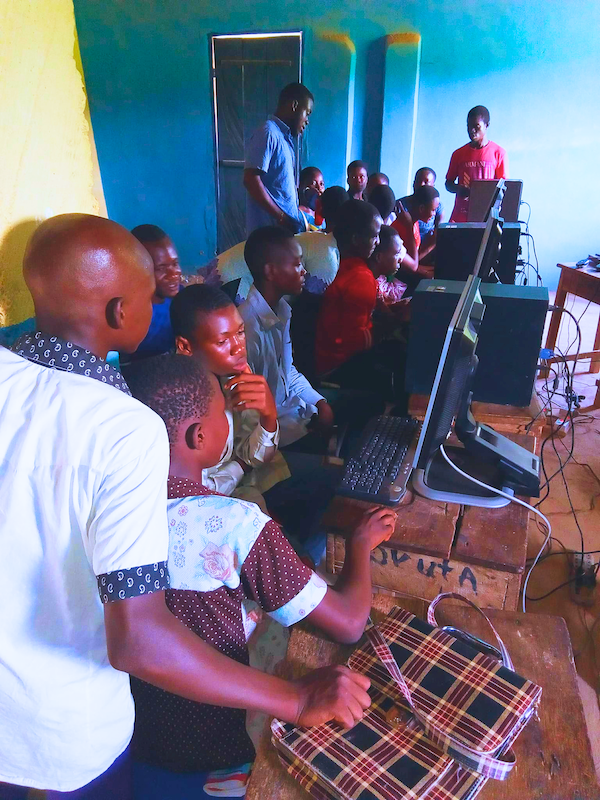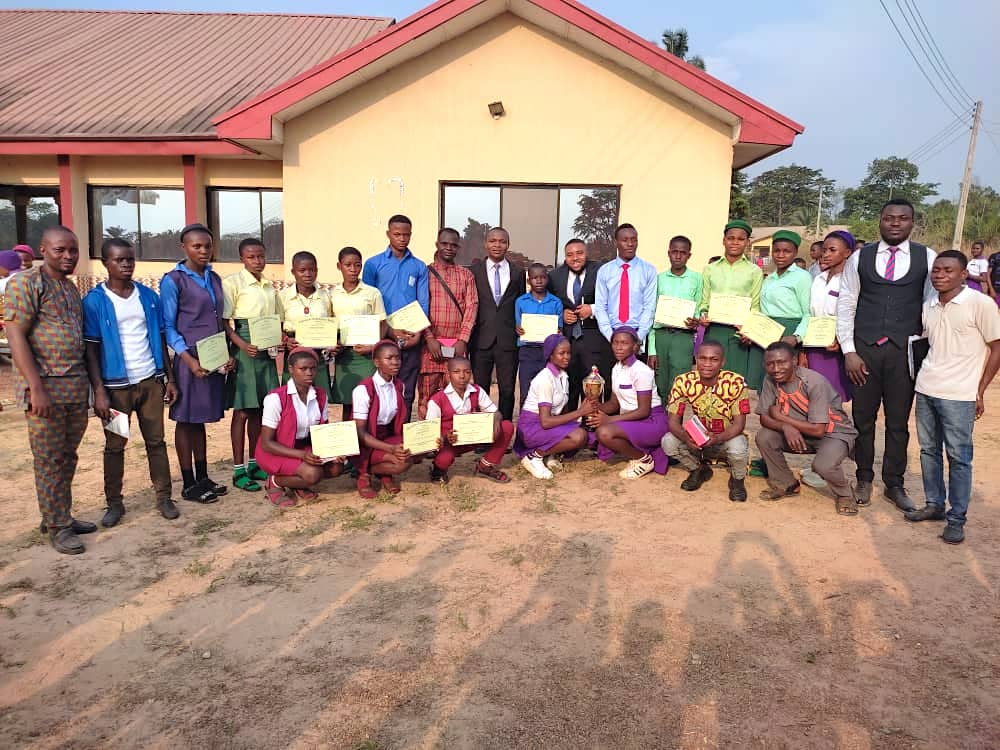

The pace of change brought about by new technologies has, no doubt, had a significant effect on the way people live, work and play worldwide. New and emerging technologies challenge the traditional process of teaching and learning; they set high standard for the way education is managed.
Information technology, being an important area of study in its own right, is having a major impact across all curricular in the academia, while serving as a tonic for easy assimilation, assessment skills, among other related scopes. Rapid communication, plus increased access to IT in the home, at work and in educational establishment(s) portend that learning becomes a truly life-long activity – an activity in constant evaluation of the learning process itself.
IT furnishes us with plenty of resources, which enhance teaching process, participants’ skills, and learning ability. With the help of IT, it is easy to provide audio and visual education, and the choice of materials for learning are being widened. In particular, it aids students in making use of new multimedia technologies to communicate idea, analyse projects, and broaden their horizon. The growth of audio-visual education has reflected development in both technology and learning theories. Studies in the psychology of learning suggest that the use of audio-visual technique in education has several advantages: all learning is based on perception, the process of memory and concept formation cannot occur without prior perception; people can attend to only a limited amount of information if solely influenced by past experiences. Also, research has found that, other conditions being equal, more information is taken in, if received simultaneously in two modalities (vision and hearing for example) rather than in a single modality. Within the purview of such factual circumstances, the identified gift of IT can be appreciated for its valuable touch on the sphere of education.
In a similar vein, IT has provided immediacy to education. Now, in the era of computer and web network, the pace of imparting knowledge is rapidly fast, and one can get educated anywhere and at any time. By providing unlimited space for virtual classrooms, it has solved the puzzle of location encountered in most educational settings. New IT has often been introduced into well-established pattern of working and living without radically altering them.
IT has made it very easy to study as well as teach in group, and with it, desired tasks can be effectively carried-out. Efficient postal playback system based on computer technology has an integral part to play in educational broadcasting in the new millennium. The internet and its websites are now among many children and youth in developed countries, and among educational elite elsewhere, but they remain of little significance to very many more, who lack the most basic means for subsistence.
Better access of children with disabilities to Information Technology has brought a drastic but positive change in life of disabled children. With IT, various software and techniques to educate this category of people are made available. People with profound deafness from birth are not left out. Deafness from birth causes severe sensory deprivation, which can seriously affect a person’s intellectual capacity or ability to learn, but with IT, all these boundaries are broken, and hope is restored.
The integration of information technology in teaching is a central matter in ensuring quality of an educational system, and it has helped students to be better equipped for the future. It brings limitless versions to the learner, and aids the educator. Technology is no substitute for an inspiring teacher, however, the usefulness of online materials cannot be over-emphasized. Limiting learning to textbooks and classroom activities can hamper progress in the process. On the other hand, a wireless laptop has access to the teacher’s course materials, the entire internet, and virtually other resourceful domains. In essence, Information Technology allows learning from anywhere, anytime, not just in one particular classroom; it does so for forty minutes a day, and even more.
With IT tools like a projector, studies could be interactive and simulated to produce a much greater depth of understanding of a concept. This cannot be compared with ‘chalk,’ ‘ink’ ‘talk’ tools of the classroom. In fact, technology allows the table, and not just teaching. Students can be given projects that require them to learn the necessary materials themselves. With IT, they have the ability to get the information they need as and when due, without even being in physical presence of a teacher. This project-based pull approach makes learning far more interesting for the students. Students learn best where they create things, not when they just consume.
If education is about knowledge and intellectual skills, and progress in them is a function of efficiency and effectiveness, then information technology lies at the heart of them all.